From the last result
to the next question
One call opens a conversation. The user can ask more about a place or result already shown, or revise the draft currently being discussed.
Less effort spent repeating the same context
Case 05 · Seoa / Athena
A personal Mac assistant connecting schedules, tasks, and research through voice and screen. I designed the experience and coordinated five AI development workstreams into one application.1
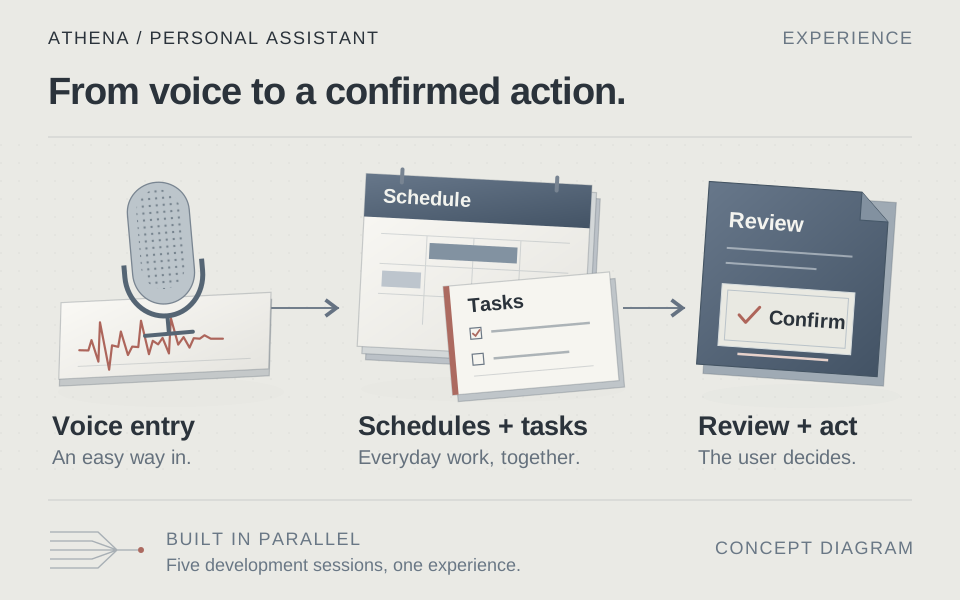
From the initial call to choosing a next action, I focused on keeping the conversation intact between features.
One call opens a conversation. The user can ask more about a place or result already shown, or revise the draft currently being discussed.
Less effort spent repeating the same context
Instead of reading an entire schedule or draft aloud, Seoa gives a short response and shows the result alongside it. The user can inspect the details while listening.
The convenience of voice, with the clarity of a screen
Review the day's schedule and tasks, then research what is needed. A selected result can lead into a proposed calendar or task change.
Connect viewing, research, and changes in one place
Alongside the features, I defined what the user needs to understand and decide at each step.
Interpreting every short follow-up as a separate command broke the conversation. I shifted the experience toward considering the previous result and pending draft, while showing what the assistant understood.
A failed lookup should not look like an empty result. I made retrieval failures and synchronization state visible so the user could judge the information correctly.
AI interprets natural language, while meaningful external changes pass through a draft and confirmation. The user should understand what will change before proceeding.
Dividing the work does not finish the product. I coordinated shared interfaces and integration points, then checked the combined result against one standard.
I selected the assumptions to test first, assigned ownership, and set the integration order. The user experience and quality of the complete product remained my responsibility.
Separate development sessions implemented their assigned capabilities and incorporated review findings. Their outputs were reviewed, revised, and connected into the complete application.
Automated tests checked functional connections, and device checks covered everyday interactions. Wake-word behavior was refined through a separate recording comparison.2
The saved experiment used the same sets of 63 noise and non-command recordings and 192 real-call recordings for the comparison. These observations apply to those recording sets, not overall app accuracy or freedom from false activations in everyday use.
Turn AI-built parts
into a product people can use.
With Seoa, I defined the problem, connected separate implementations, and validated the result against clear acceptance criteria. The work combines implementation with the judgment needed to make one coherent experience.